Sunday, August 29, 2010

Santiago de Chiquitos


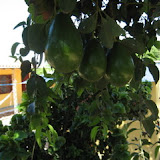
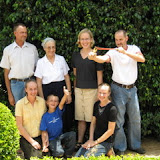
This week we traveled out east, to Santiago de Chuiquitos, together with Liz' second cousin Helga Fehr and her son Wesley (they live in colony Canadiense II here in Bolivia). After a 10-hour train ride from Santa Cruz, we arrived in Robore at 2.30am and took a taxi the last half hour to Santiago. We stayed in a guest house owned by Milton and Katherine Whittaker. From there it´s about a 10-minute walk to the Whittaker's ranch home (entrance shown above). We enjoyed visiting with them and exploring the town a bit. The weather felt quite tropical--hot and humid, but also very smoky due to the recent spate of fires burning out of control.


The community of Santiago hosts a fine Baroque music program for children and youth. MCC has supported this by providing a one-year SALT position each of the past four years (the fourth arrived when we were there) to teach music lessons and direct a youth orchestra and choir. A past SALTer, who is still in the area, also arranged for an organ to be shipped from Earlham college and installed in the Catholic church--quite a rarity in this country and certainly in this rural area! Liz had a grand time trying it out a bit, and then five of us MCCers had a wonderful impromptu hymn sing around it.


These photos are from the guesthouse, hosted by Dona Marta, who cooks quite the delicious meals and provides a running local commentary.


This was Jonathan's first train ride. Memorable, if not exactly fun.


And here is a short video of the Santiago youth choir practicing.

For more photos, click here.

Tuesday, August 24, 2010

From the archives


I just found this, which we took last month while in Santa Cruz. This is what we really do when we come in to help at Centro Menno.

Sunday, August 22, 2010

Another Guarani-Mennonite exchange


Another project in August, together with our friends from the NGO Volens, was to organize and participate in a "cultural exchange" between Old Colony Mennonites from Durango Colony and indigenous women from the large Guarani region of Isoso, Bolivia. The six Mennonites and we were hosted by a group of women artisans--this group makes soap and sews children's clothing to sell in their community. Several of these Guarani women had watched laundry soap-making in Durango Colony last year, and this was their chance to demonstrate how to make body soap.

We began the cold, blustery day by having tea and cookies at the home of the director of the women's group. They then led us through the entire process of making soap, beginning with building a fire to melt fat and ending with stamping each piece of glycerin soap and giving each of us one to take home. We then ate lunch, wrapped up, and headed home. In between, the men went to see the fields and the river with one of the few men still in the community (most are in far-off Montero cutting sugar cane).

LEFT: Ramont and the men look at the fields.


Mrs. Doerksen from Durango brought some laundry soap to give members of the Isoso women's group, which they are examining here.


Here we are in front of the soap-making building.

A final thought: we often tend to over-romanticize the value of these exchanges, so we won't say too strongly that each group now heartily appreciates the culture of the other. One of our ongoing challenges is knowing how to talk honestly but appreciatively with Mennonites about their Bolivian neighbors. However, it is true that at least one of the Mennonite women is going to try this method for making hand soap. And we think it is also true that the world of each participant in this exchange was made just a bit bigger and wider.

For more photos of this event, click here.

Putting up a windmill


A few weeks ago a long on-going project of ours was finally brought to fruition! A windmill built by Mennonites in Durango Colony was delivered and installed in Caipepe, a Guarani community seven miles north of La Estacion de Charagua (where we live), on 9 and 11 August 2010. Members of Caipepe community approached us last year for help in bringing water to the 80-some family homes. MCC agreed to provide a windmill to pump from an existing community well, and the people of Caipepe agreed to provide a 5.000 liter water tank, a stand for the tank, and pipes to bring water to taps on each yard in the community.

The windmill was made in Durango Colony and loaded up in three parts onto a wagon, pulled by Ramont in pick-up about 60 kms to Caipepe. Ramont was also enlisted to drive tractor to pull up the windmill (see first photo)--and then also to let it down two days later, when it had to be fixed a bit and then relifted. It is 15 meters high, with a wheel span of 12 feet. Here the Klassens hook up the pump to the well.


Here the mayor of Caipepe washes his hand with the first water out of the well. An inauguration celebration is planned for mid-October, during the community's annual fiesta.

For more photos of this event, click here.

Jonathan at five months